Tropical highland blackberry + Andean blackberry
Rubus adenotrichos is commonly called tropical highland blackberry. It grows in Central America, northwestern South America, and central and southern Mexico, belongs to the Rosaceae family. Rubus adenotrichos is a shrub that can grow up to 6 meters tall. The flowers are pink or white, the fruits are red or black. [Wikipedia] Rubus adenotrichos contains phenolic compounds, mainly ellagitannins, and anthocyanins, it is a good source of antioxidants. Research has shown that Rubus adenotrichos had potential effects against oxidative stress and inflammation. (PMID: 23697506)
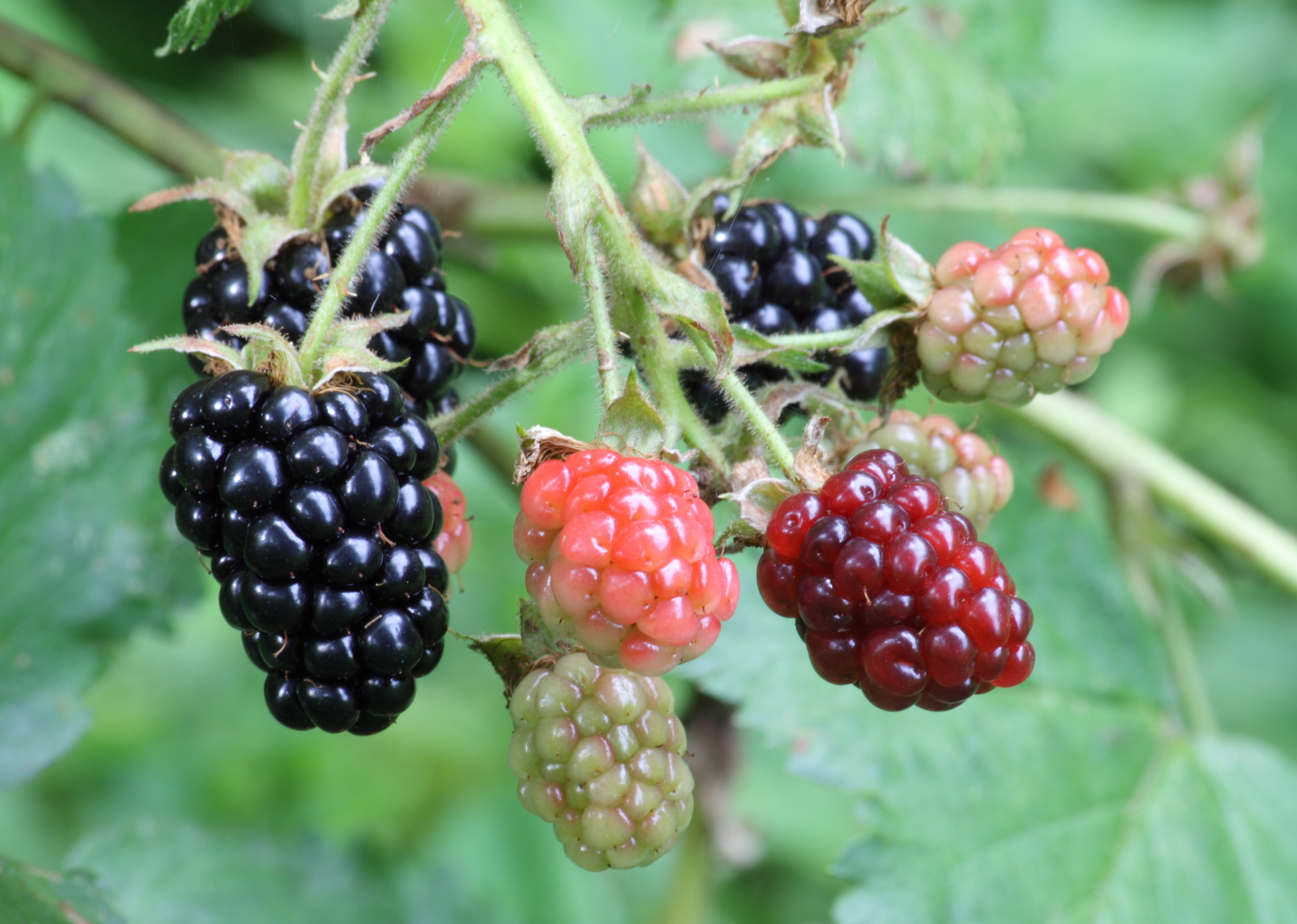
Rubus glaucus, commonly called Andean blackberry, Andes berry or mora de Castilla, is a species of blackberry, it belongs to the Rosaceae family. It grows in Latin America from Oaxaca to Bolivia. Rubus glaucus is a perennial semi-erect climbing shrub, it can grow up to 3 meters. The fruit is bright purple when ripe. Rubus glaucus is rich in vitamin C, phenols, anthocyanin, it shows a high antioxidant activity. (PMID: 20170356) [Wikipedia]
Shared flavor compounds
These compounds appear in both Tropical highland blackberry and Andean blackberry, giving them a molecular basis for flavor affinity, the pairing principle articulated by Francois Benzi and implemented in flavor-pairing research.
Why it works
The flavor-pairing hypothesis proposes that ingredients sharing significant aromatic compounds harmonize on the palate. Tropical highland blackberry and Andean blackberry overlap on 3 key compound(s), which is why classic culinary traditions, and our deterministic matching algorithm, place them together.
- Pairing computed by: pairing-compute
- Methodology: deterministic compound-overlap matching (no LLM)
- Compound data: Wikidata + Wikidata
- Part of: Living Gastronomic Intelligence graph