Foodgeist is a participant in the Amazon Services LLC Associates Program, an affiliate advertising program designed to provide a means for sites to earn advertising fees by advertising and linking to Amazon.com. As an Amazon Associate we earn from qualifying purchases.
Spelt — Ingredient · Foodgeist
Ingredient
Spelt
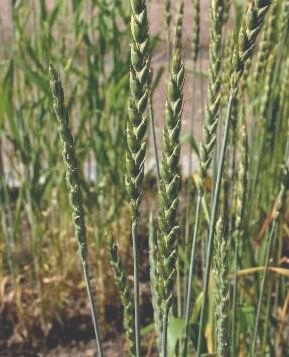
Spelt, also known as dinkel wheat, or hulled wheat, is a species of wheat cultivated since 5000 BCE. Spelt was an important staple in parts of Europe from the Bronze Age to medieval times; it now survives as a relict crop in Central Europe and northern Spain and has found a new m
About
Spelt, also known as dinkel wheat, or hulled wheat, is a species of wheat cultivated since 5000 BCE. Spelt was an important staple in parts of Europe from the Bronze Age to medieval times; it now survives as a relict crop in Central Europe and northern Spain and has found a new market as a health food. Spelt is sometimes considered a subspecies of the closely related species common wheat (T. aestivum), in which case its botanical name is considered to be Triticum aestivum subsp. spelta. It is a hexaploid wheat, which means it has six sets of chromosomes.
Aroma profile
Derived from this ingredient’s flavor compounds
fresh×6
aromatic×6
mint×4
camphoraceous×4
grassy×4
pungent×4
cooling×3
menthol×3
Taste profile
Derived from this ingredient's compounds · measured taste classes
Ranked across every axis at once: shared flavor chemistry, real-recipe co-use, novel-discovery, and nutrient synergy. Pairs agreeing on two or more axes lead.
Molecular affinity
Pairs well with — ingredients that share aroma compounds
“Spelt differs from wheat in that it has a higher protein content (15.6% for spelt, 14.9% for wheat), higher lipid content (2.5% and 2.1%, respectively), lower insoluble fiber content (9.3% and 11.2%, respectively)”
spelt (Triticum spelta)→has lower insoluble fiber content than→wheat
“Spelt differs from wheat in that it has a higher protein content (15.6% for spelt, 14.9% for wheat), higher lipid content (2.5% and 2.1%, respectively)”
spelt (Triticum spelta)→has higher lipid content than→wheat
“Spelt differs from wheat in that it has a higher protein content (15.6% for spelt, 14.9% for wheat), higher lipid content (2.5% and 2.1%, respectively), lower insoluble fiber content (9.3% and 11.2%, respectively)”
spelt (Triticum spelta)→has lower insoluble fiber content than→wheat