About
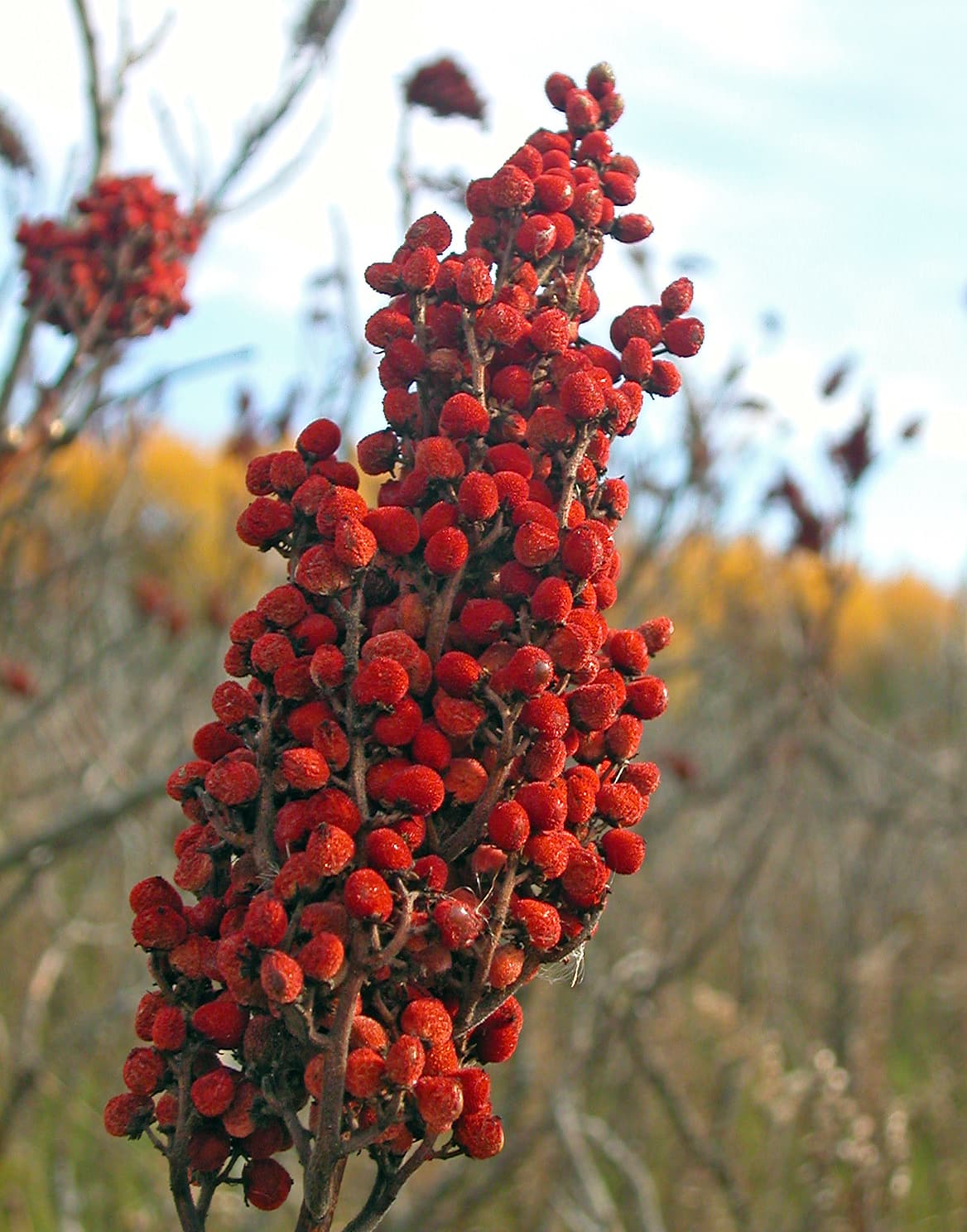
Sumac or sumach —not to be confused with poison sumac—is any of the roughly 35 species of flowering plants in the genus Rhus of the cashew and mango tree family, Anacardiaceae. However, it is Rhus coriaria that is most commonly used for culinary purposes. Sumac is prized as a spice—especially in Arab cuisine, and other Eastern cuisines—and used as a dye and holistic remedy. The plants grow in subtropical and temperate regions, on nearly every continent except Antarctica and South America. It holds cultural significance as a symbolic item on the Haft-sin table during Nowruz, the Persian New Year.
Aroma profile
Derived from this ingredient’s flavor compounds
Taste profile
Derived from this ingredient's compounds · measured taste classes
Composition
5 compounds predicted — inferred from related foods, not directly measured
predicted composition — no direct measurement on record for this foodPredicted from chemically-related foods · click to view molecular profile
Best pairings
Ranked across every axis at once: shared flavor chemistry, real-recipe co-use, novel-discovery, and nutrient synergy. Pairs agreeing on two or more axes lead.
Molecular affinity
Pairs well with — ingredients that share aroma compounds
Based on shared flavor compounds · click to explore
Commonly combined
Frequently used together in real recipes — ranked by how specifically these ingredients appear together
Research Evidence
The Geist can be wrong. Some flavor, taste, and pairing values are model-predicted, not lab-measured.