Molecular structure
butane-2,3-dione
Cooking relevance
Butane-2,3-dione (diacetyl, PubChem CID 650) is a volatile organic compound that contributes buttery, creamy aromatic notes in food. It forms naturally during fermentation and is used as a flavoring agent to impart rich, dairy-like sensory qualities. Its presence is detected at very low concentrations, where it significantly influences perceived flavor complexity and mouthfeel in culinary applications.
- aroma
- buttery · creamy · dairy-like · slightly sweet
- culinary role
- flavoring agent providing buttery notes in fermented and processed foods
- mass spectra
- 22 experimental spectra
Mass spectrum
A real measured fragmentation pattern · 1 of 22 experimental spectra
Sensory signature
How this molecule tastes and smells · gold is measured, dashed is a model estimate
Receptor binding
Measured in literature · peer-reviewed · how this compound interacts with biological receptors
Biochemical reactions
Metabolic reactions from curated biochemical databases · peer-reviewed
(R)-acetoin + NAD(+) = diacetyl + NADH + H(+)
(S)-acetoin + NAD(+) = diacetyl + NADH + H(+)
acetoin + NADP(+) = diacetyl + NADPH + H(+)
Research associations
Literature-derived · peer-reviewed sources only · not medical advice
Foods containing this compound

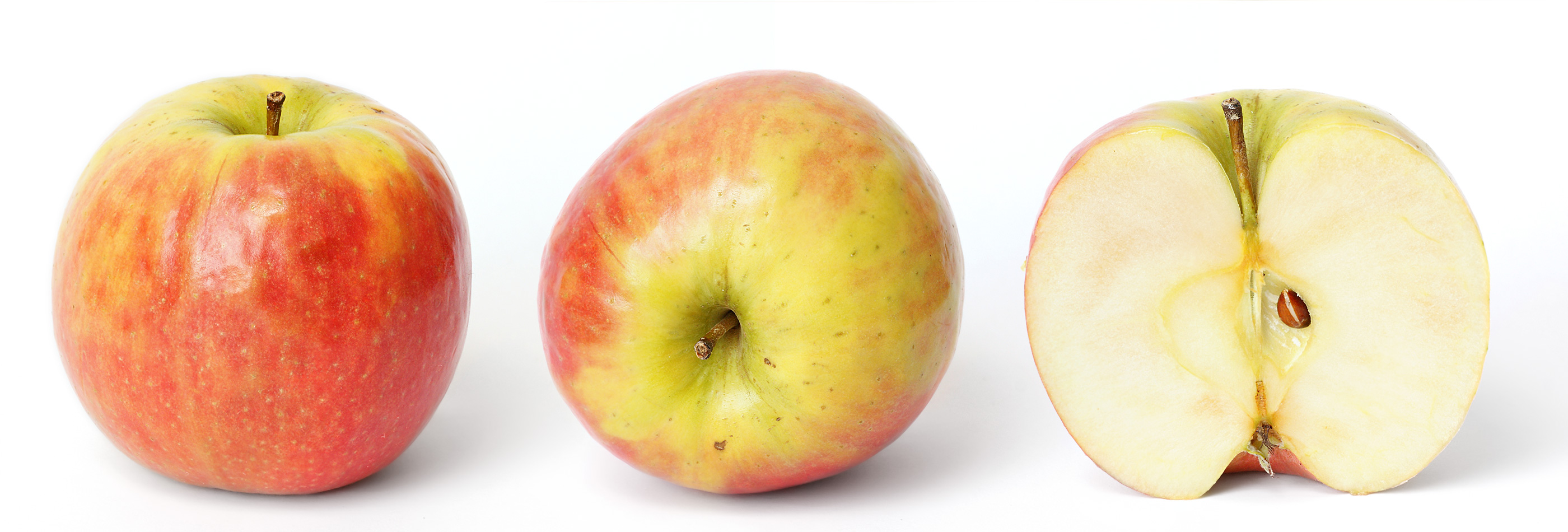
The apple is the pomaceous fruit of the apple tree, species Malus domestica in the rose family. It is one of the most widely cultivated tree fruits, and the most widely known of the many members of genus Malus that are used by humans. Apples grow on small, deciduous trees. The tree originated in Central Asia, where its wild ancestor, Malus sieversii, is still found today. Apples have been grown for thousands of years in Asia and Europe, and were brought to North America by European colonists. Apples have been present in the mythology and religions of many cultures, including Norse, Greek and Christian traditions. In 2010, the fruit's genome was decoded, leading to new understandings of disease control and selective breeding in apple production. There are more than 7,500 known cultivars of apples, resulting in a range of desired characteristics. Different cultivars are bred for various tastes and uses, including in cooking, fresh eating and cider production. Domestic apples are generally propagated by grafting, although wild apples grow readily from seed. Trees are prone to a number of fungal, bacterial and pest problems, which can be controlled by a number of organic and non-organic means. About 69 million tonnes of apples were grown worldwide in 2010, and China produced almost half of this total. The United States is the second-leading producer, with more than 6% of world production. Turkey is third, followed by Italy, India and Poland. Apples are often eaten raw, but can also be found in many prepared foods (especially desserts) and drinks. Many beneficial health effects have been found from eating apples; however, two forms of allergies are seen to various proteins found in the fruit.
Verified Data
Compound identity and culinary context are continuously cross-referenced across open scientific databases and maintained by Foodgeist's enrichment pipeline.
The Geist can be wrong. Some flavor, taste, and pairing values are model-predicted, not lab-measured.