About
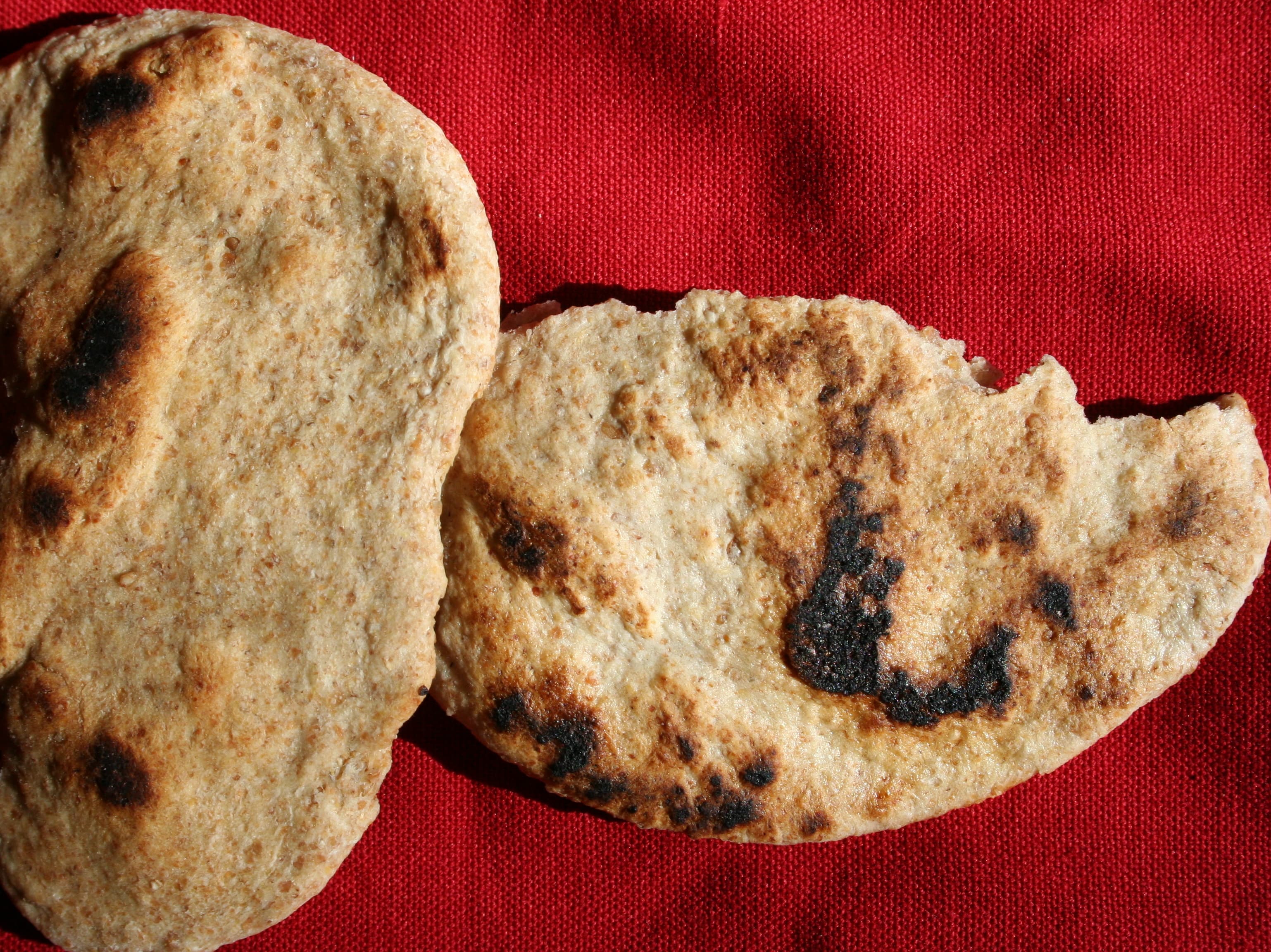
A flatbread is bread typically made with flour, water, and salt, with or without leavening, which are mixed and rolled into flattened dough. They are usually baked quickly at high temperatures and range from below one millimeter to a few centimeters in thickness. Flatbreads are distinguished from other flour-based foods such as loaf breads, which have lower proportions of crust relative to crumb; pancakes, which use liquid batter rather than firm dough; and crackers, which are dry and crisp. Flatbreads are the oldest and most common type of bread, and are often staple foods. Many types of flatbread are eaten globally.
Composition
4 compounds identified — cross-referenced scientific databases
Highlighted compounds are flavor-active · "~pred" marks predicted edges · click to view molecular profile
Best pairings
Ranked across every axis at once: shared flavor chemistry, real-recipe co-use, novel-discovery, and nutrient synergy. Pairs agreeing on two or more axes lead.
Molecular affinity
Pairs well with — ingredients that share aroma compounds
Based on shared flavor compounds · click to explore
Commonly combined
Frequently used together in real recipes — ranked by how specifically these ingredients appear together
Research Evidence
The Geist can be wrong. Some flavor, taste, and pairing values are model-predicted, not lab-measured.