About
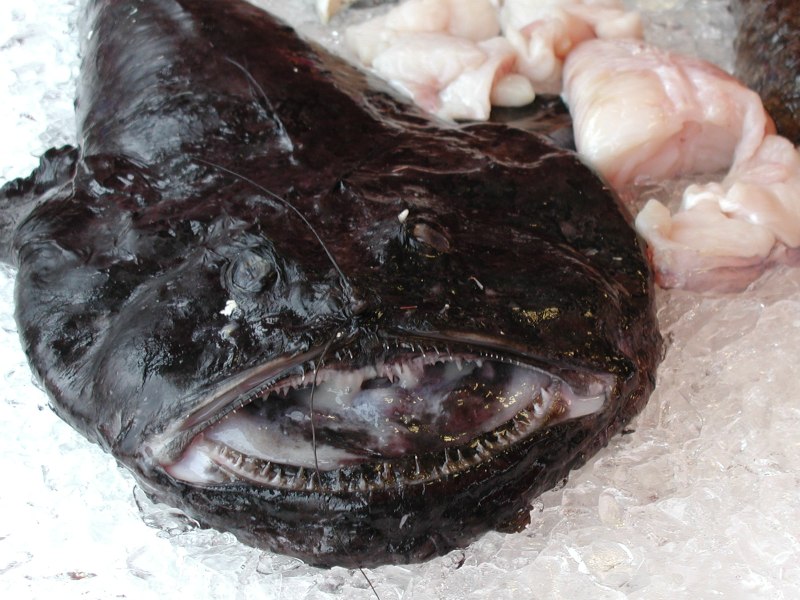
Monkfish (or headfish) is the English name of a number of types of fish in the northwest Atlantic, most notably the species of the anglerfish genus Lophius and the angelshark genus Squatina. The term is also occasionally used for a European sea monster more often called a sea monk. Monkfish is the most common English name for the genus Lophius in the northeast Atlantic but goosefish is used as the equivalent term on the eastern coast of North America. Lophius has three long filaments sprouting from the middle of the head; these are the detached and modified three first spines of the anterior dorsal fin. As in most anglerfish species, the longest filament is the first (illicium), which terminates in an irregular growth of flesh, the esca. This modified fin ray is movable in all directions. This esca is used as a lure to attract other fishes, which monkfish then typically swallow whole. Experiments have shown that whether the prey has been attracted to the lure or not is not strictly relevant, as the action of the jaws is an automatic reflex triggered by contact with the esca. It grows to a length of more than 1.5 m (5 ft); specimens of 1 m (3 ft) are common. The largest recorded specimen weighed 115 kg (253 lb) and was caught on January 7, 2012, by Frank-Rune Kopperud of Norway. The previous record holder was a specimen of 99.4 kg .
Aroma profile
Derived from this ingredient’s flavor compounds
Taste profile
Derived from this ingredient's compounds · measured taste classes
Composition
26 compounds identified — cross-referenced scientific databases
Best pairings
Ranked across every axis at once: shared flavor chemistry, real-recipe co-use, novel-discovery, and nutrient synergy. Pairs agreeing on two or more axes lead.
Commonly combined
Frequently used together in real recipes — ranked by how specifically these ingredients appear together
Research Evidence
The Geist can be wrong. Some flavor, taste, and pairing values are model-predicted, not lab-measured.