About
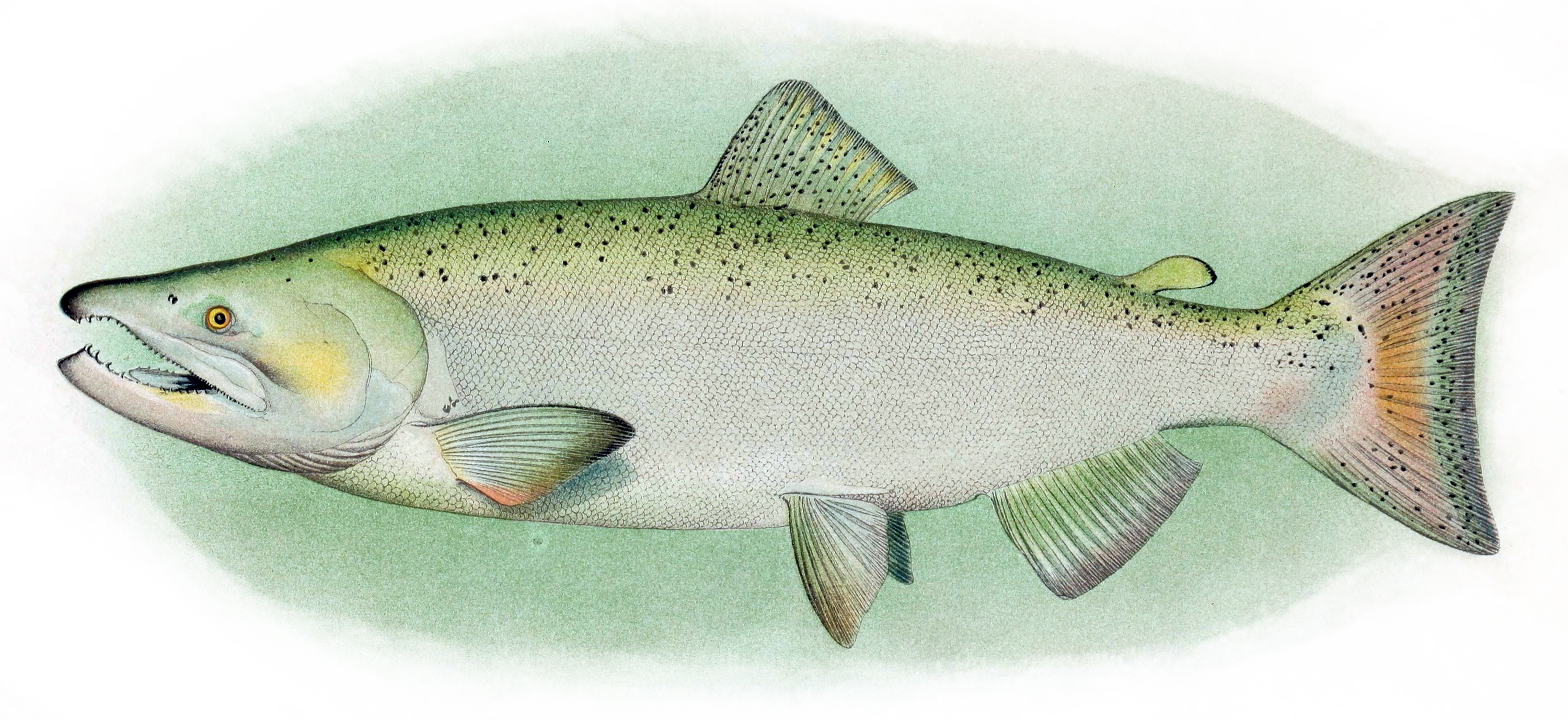
The Chinook salmon, Oncorhynchus tshawytscha, is the largest species in the Pacific (Oncorhynchus) salmon family. Other commonly used names for the species include king salmon, Quinnat salmon, spring salmon and Tyee salmon. Chinook are anadromous fish native to the north Pacific Ocean and the river systems of western North America ranging from California to Alaska. They are also native to Asian rivers ranging from northern Japan to the Palyavaam River in the Siberian far east, although only the Kamchatka Peninsula supports relatively persistent native populations. They have been introduced to other parts of the world, including New Zealand and the Great Lakes. A large Chinook is a prized and sought-after catch for a sporting angler. The flesh of the salmon is also highly valued for its dietary nutritional content, which includes high levels of important omega-3 fatty acids. Some populations are endangered, though Chinook salmon have not been assessed for the IUCN Red List.
Aroma profile
Derived from this ingredient’s flavor compounds
Taste profile
Derived from this ingredient's compounds · measured taste classes
Composition
59 compounds identified — cross-referenced scientific databases
Research Evidence
The Geist can be wrong. Some flavor, taste, and pairing values are model-predicted, not lab-measured.